

In Japan, the push for medical DX (digital transformation) is accelerating – with initiatives such as nationwide medical platforms and standardization of electronic medical records (EMR) driving change. For Hakuai Hospital, this meant that routine administrative and data-migration tasks were becoming a bottleneck for both efficiency and ensuring medical safety. The hospital recognized that automating key workflows could reduce workload, improve the quality of care, and free medical staff for direct patient interaction.
Hakuai hospital, therefore, adopted WinActor to automate EMR-related operations, data aggregation, master-code mapping, and side-effect history checks – with the twin goals of operational efficiency and enhanced medical safety.
About the Customer
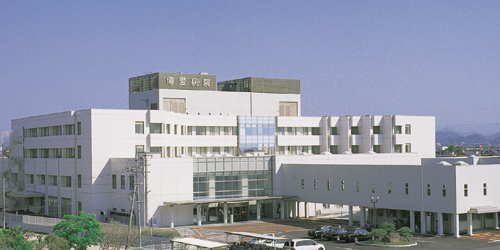
Hakuai Hospital is operated by Doaikai Medical Corporation (社会医療法人同愛会) and is located in Yonago City, Tottori Prefecture, at the address “1880 Ryōmitsu Yanagi, Yonago‐shi, Tottori-ken”. Founded in October 1921, the hospital has served the region for over a century, providing acute-phase medical care and working in collaboration with national institutions.
Challenges
The hospital faced the following key challenges:
- The manual task of organizing data for about 230,000 patient records within the old EMR system was deemed impossible to continue processing manually, and the hospital could not find an effective solution through manual methods alone.
- With the hope that RPA would make the data migration feasible, the hospital introduced WinActor in June 2024.
Automation Objectives
Hakuai Hospital set out with several clear objectives:
- To lighten the burden on the pharmacy department that, each month, had to extract and aggregate medical-consumables data (specifically pharmaceutical consumption and revenue) from accounting systems – a task that was heavy in manual effort.
- To map approximately 1,200 existing usage-master entries in the legacy EMR system to standard master codes for electronic prescription, an exercise that would otherwise take around 30 hours manually (assuming 1.5 minutes per record).
- To strengthen medical safety by automating the generation of confirmation lists for patients with new side-effect histories, making sure no registration or check is overlooked.
- Specifically, the hospital wanted to extract registrations added in the past week by side-effect history and generate lists for follow-up.
Execution of the Automation Project
Automating Monthly Pharmaceutical Consumption Data Aggregation
Using WinActor, Hakuai Hospital automated the extraction of consumption amount and revenue data from its accounting systems, computed unit cost usage from the volume of pharmaceuticals used, and then aggregated the data. What once took 2–3 hours (and sometimes half a day) for month-end processing was reduced to just 10–15 minutes for the final aggregation.

“Because WinActor excels at repetitive tasks, we decided to first automate the manual work handled by the pharmacy department. Amid our busy schedules, streamlining administrative work allowed us to secure more time to be involved with patients.” – Mr. Kato – Pharmacy Department & Information Systems Management Office, Hakuai Hospital.
Mapping Legacy EMR Master Codes to Standard Codes
The hospital applied WinActor to link 1,200 items from an older EMR usage-master to standard codes for electronic prescription support. Originally expected to take about 30 hours manually (at 1.5 minutes each), the scenario creation with WinActor took 12 hours and execution about 6 hours – roughly one-fifth of the manual effort.
Automating Side-Effect History Confirmation Workflow
To enhance medical safety, a scenario was developed to extract data of registrations of side-effect histories from the past week, identify new entries, and generate a confirmation list. This supports the hospital in securing reliable checks of patients with allergies or other critical conditions, thereby preventing potential prescription contradictions.
Adoption and Integration
The hospital chose WinActor because it had abundant case studies and know-how, and because they felt the vendor’s team was truly committed to the hospital’s DX journey, not just a tool sale.
The EMR migration project – extracting PDF data from the old system and saving it in a way accessible from the new EMR – was achieved in about four months, using WinActor’s advanced functions (including image recognition).
“WinActor was appealing because it has abundant case studies and know-how to accomplish what we wanted to achieve. What ultimately made the difference was feeling the strong enthusiasm of the vendor — ‘we want to support Hakuai Hospital.’ We were convinced we could work together toward DX, which led to the decision to implement WinActor.” – Mr. Yagura – Assistant Manager, Information Systems Management Office, Hakuai Hospital.
Achievements and Measurable Outcomes
- Time savings: The monthly pharmaceutical-data aggregation process dropped from 2–3 hours (or more) to about 10–15 minutes.
- Master-code mapping efficiency: A task estimated at 30 hours for manual execution was reduced to about 6 hours via automation – a factor of approximately five improvement.
- Improved medical safety: Automating the confirmation list for side-effect registration supported the hospital’s goal of reducing human-error risk and strengthening patient-monitoring workflows.
- Wider digital transformation ripple: The success of these initial scenarios led to the plan to expand WinActor use across departments, to form an RPA promotion team, and cultivate scenario creation internally.
“We need to promote RPA within the hospital, build an organization that can create scenarios in-house, and identify automatable tasks. We plan to form an RPA promotion team with at least one member per department. By creating scenarios that operate daily and using them in practice, we can deepen our understanding of WinActor. We expect this to further improve efficiency and contribute to an environment that provides safe medical care to patients.” – Mr. Yagura
Take the Next Step in Your Digital Transformation with WinActor
If your organization is seeking to reduce administrative burden, accelerate data migration, or enhance quality and safety through automation, then WinActor offers a proven pathway. Hakuai Hospital’s journey demonstrates that with commitment and collaboration, RPA can become a strategic enabler, not just a cost-saving tool. Reach out to our experts today to discuss how you can apply these lessons to your own institution and drive meaningful change.








WinActor is an RPA software solution by NTT DATA Corporation to help businesses master technology, create breakthroughs in the digital age 4.0.
